

Mortdale based. Sydney wide. 15 years on the tools.
Tree Health Assessment Sydney
AQF Level 5 arborists, $20M public liability and council paperwork handled. Tell us about the job and we call you back the same day.
★ 5.0 from 71 Google reviewsAQF Level 5 arboristsISO 9001 certified$20M public liability
Know what is happening before you spend money on tree work.
A tree health assessment gives you a clear, practical read on a tree's condition before you decide what to do next. An AQF Level 5 arborist checks canopy density, dieback and deadwood, cracks, cavities and fungal fruiting bodies, pest and disease activity, the root zone and soil, storm exposure, and what the tree could reach if something failed — roofs, fences, driveways, pools, powerlines and paths.
The goal is not to remove every tree that looks untidy. It is to separate trees that can be kept, pruned or monitored from trees that genuinely need action — and to tell you which is which, on site, in plain English. If council rules, building work or a dispute are involved, the same arborist can take it further as a formal arborist report.
Signs your tree may be sick or dangerous
You do not need to diagnose the cause — that is our job. But these are the signs worth a phone call.
In the canopy
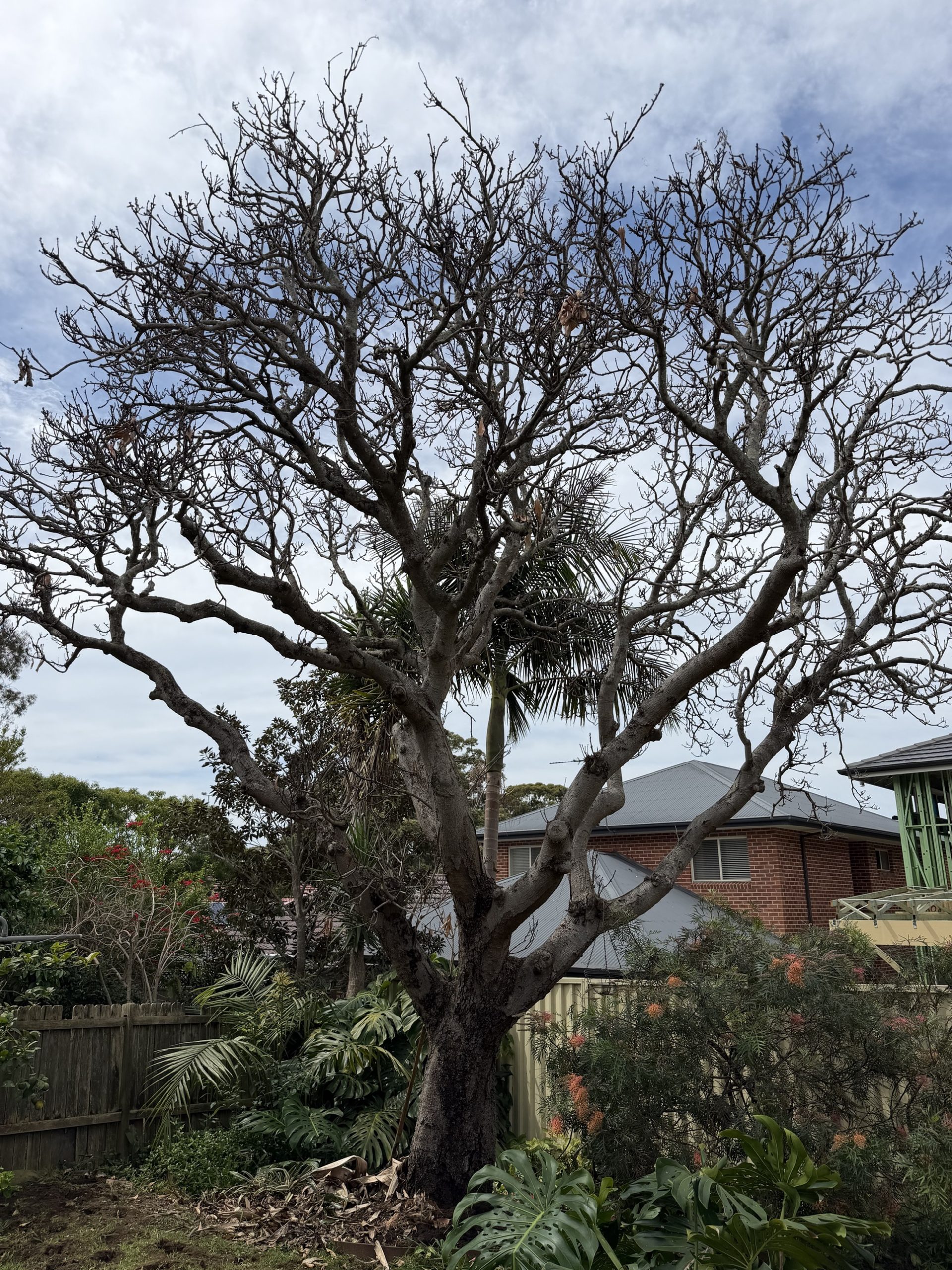
- Thinning foliage or bare patches you can suddenly see through
- Dead branches in the upper crown
- Leaves browning, yellowing or dropping out of season
- Yellow pustules on new growth of lilly pillies and other natives
On the trunk
- Cracks, splits or cavities
- Bark lifting or falling away in sheets
- Fungal brackets growing from the trunk or old wounds
- Tight V-shaped forks with bark pinched inside the union
At the roots and base
- Mushrooms or woody brackets at the base of the tree
- Soil lifting or cracking near the trunk
- Roots cut or disturbed by recent excavation
- A lean that is new, or has got worse after rain or wind
A new lean, a large hanging branch or a crack that has just appeared is urgent — call 0422 023 242 and we treat it as a priority.
How we look at a tree
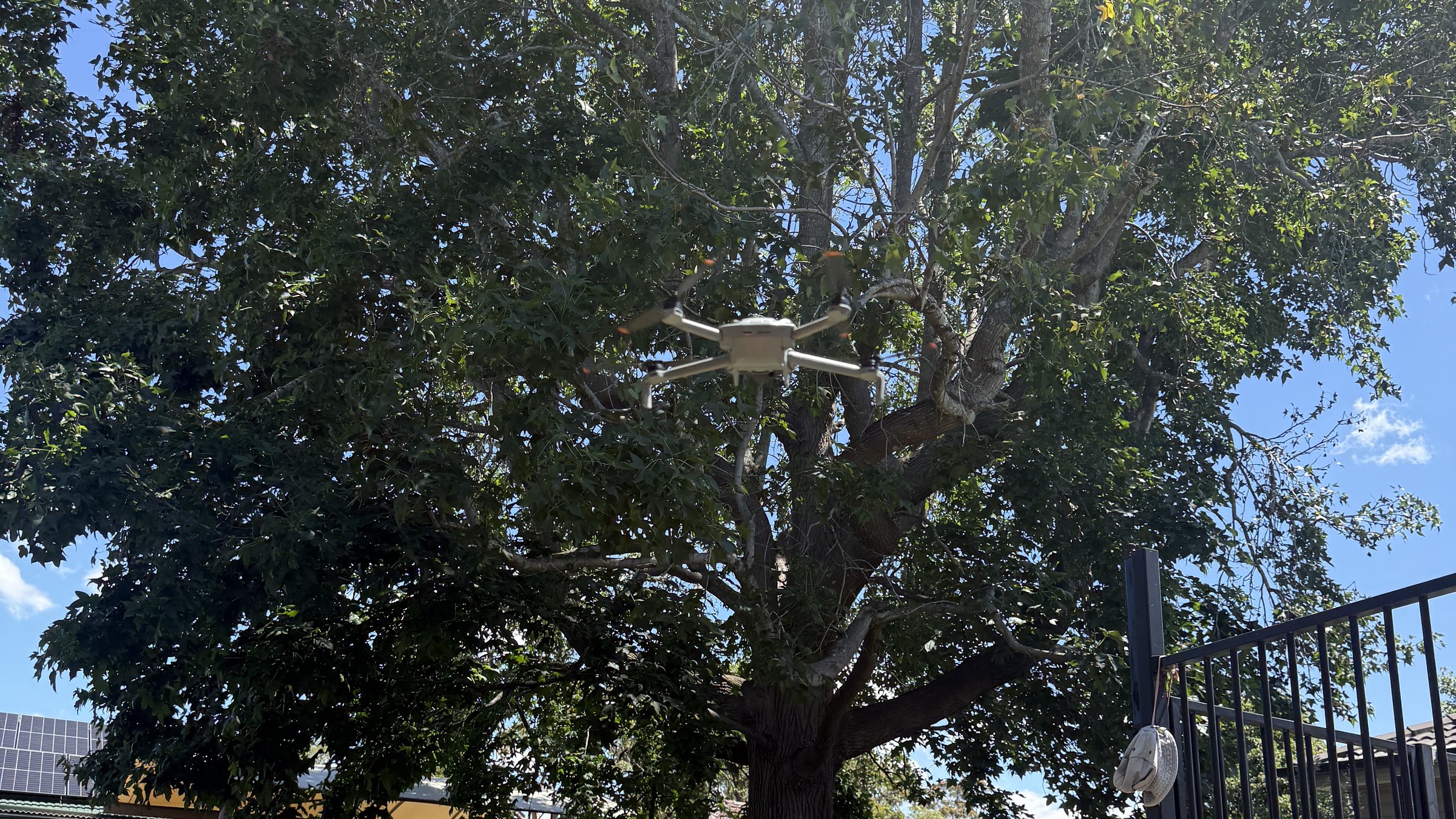
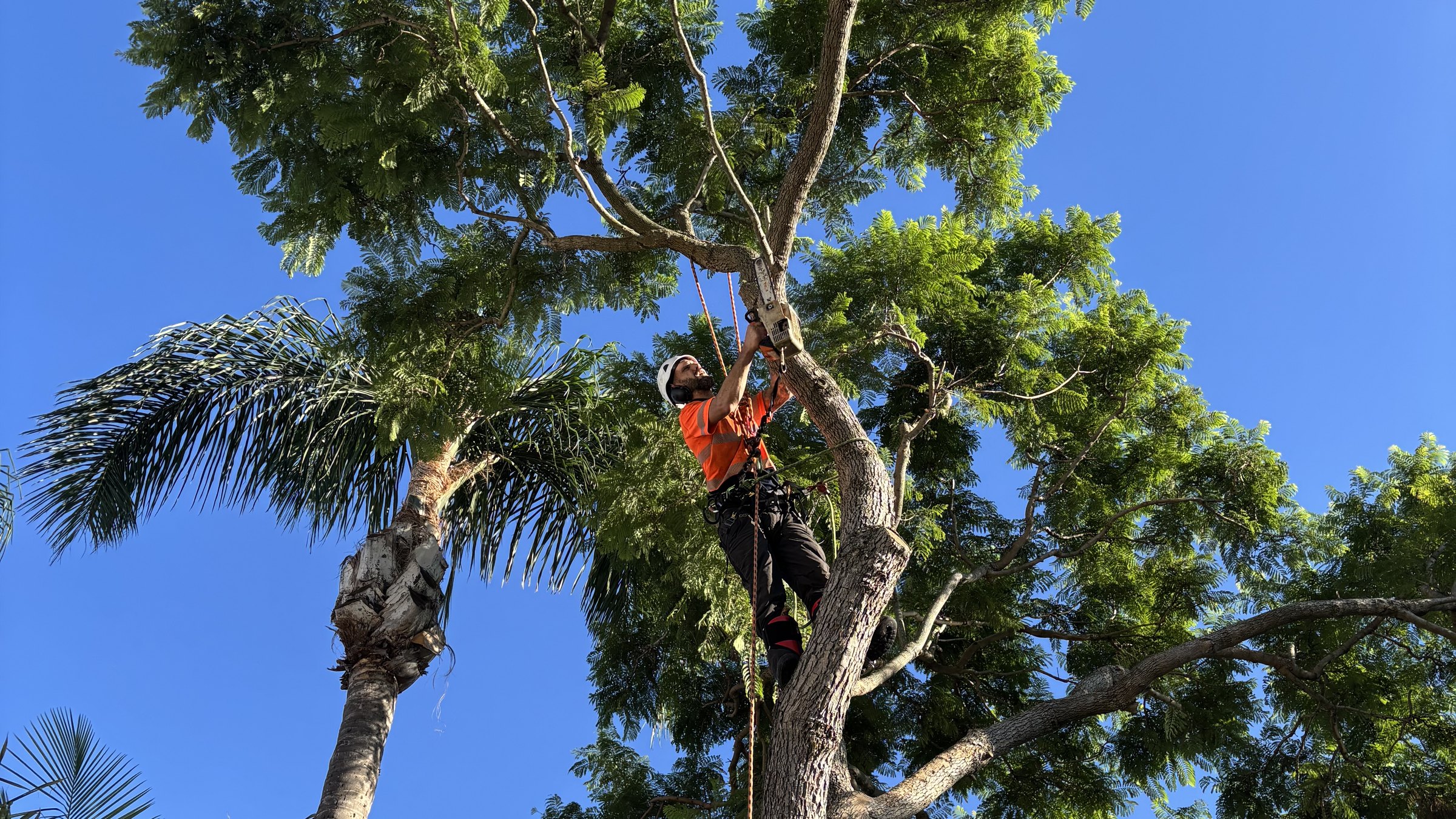
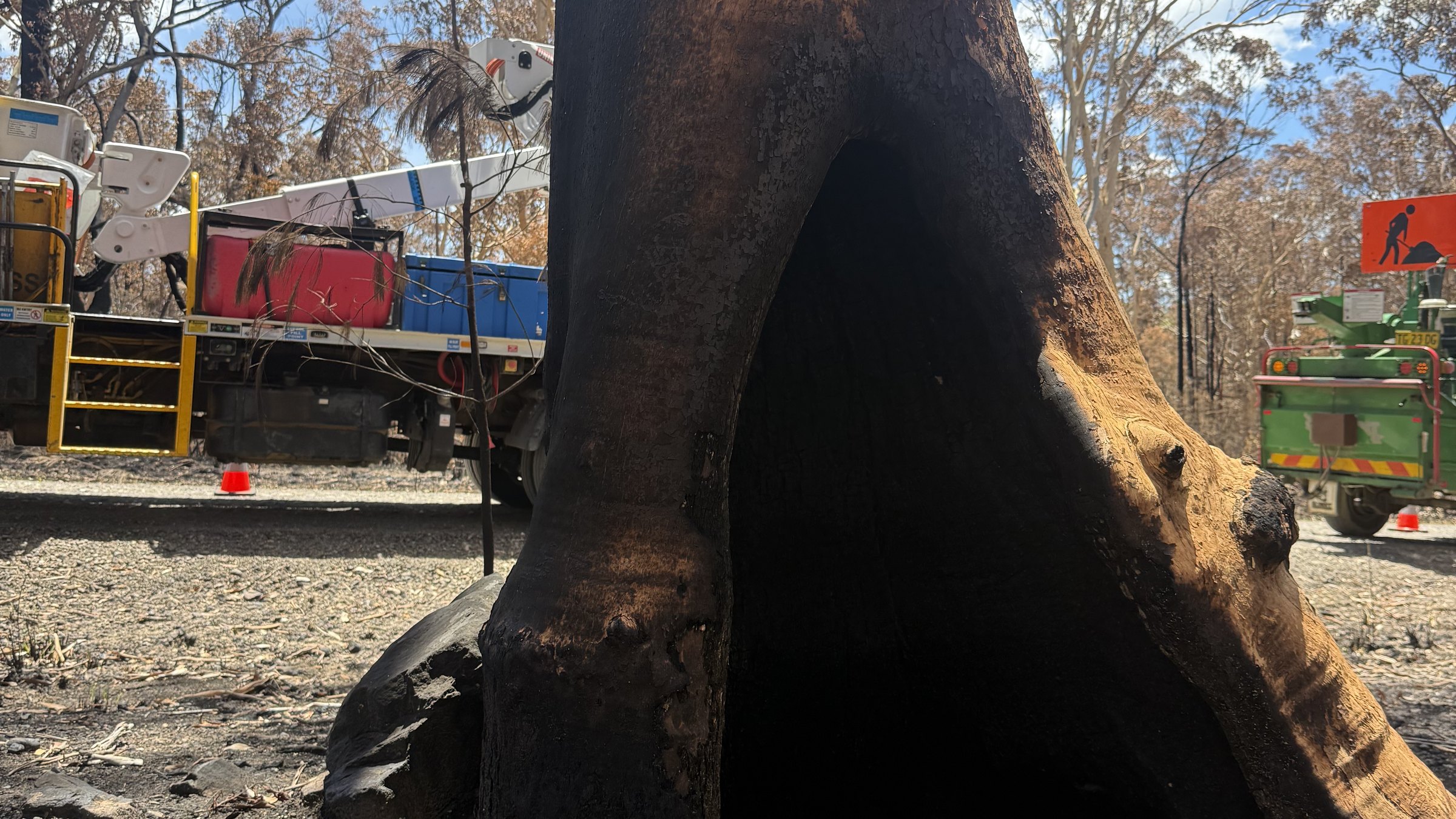
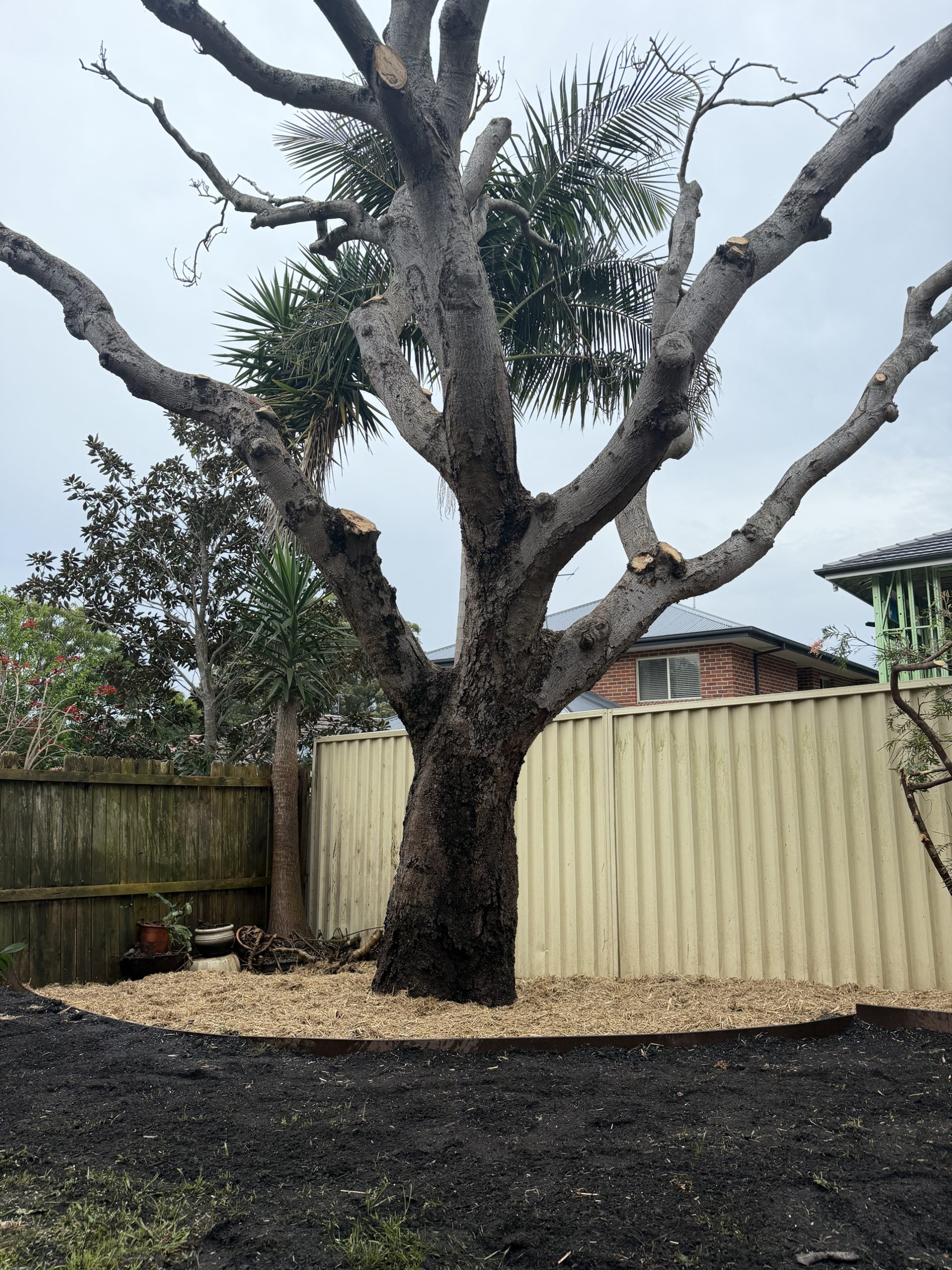
Photos from our own jobs. Client addresses are never published.
Every assessment starts from the ground: root crown and soil first, then the trunk and every major union, then the canopy. We look at the tree's defects and its targets together — a hollow in a paddock tree and the same hollow over a bedroom are different problems. Some situations call for internal decay testing; we tell you when that is genuinely worth paying for, and when it is not.
Common pests and diseases in Sydney trees
These are the problems we are asked about most. The descriptions below follow NSW DPI and the Botanic Gardens of Sydney, so you can check them yourself.
| Problem | What you see | What it means |
|---|---|---|
| Myrtle rust | Small purple leaf spots developing bright yellow spore pustules on soft new growth of lilly pilly, bottlebrush, paperbark, tea tree and eucalypts. | A fungal disease of the Myrtaceae family. Do not prune it yourself — disturbing pustules spreads spores. NSW DPI. |
| Phytophthora dieback | Gradual canopy decline and dieback, often after wet periods or soil disturbance. | A soil-borne water mould; the Botanic Gardens notes infection is permanent, so management is about protecting roots and soil, not a cure. |
| Armillaria root rot | Declining vigour; honey-coloured mushrooms can appear at the base. | A soilborne fungus causing root rot and wood decay in a wide range of plants. |
| Cypress canker | Branches or whole sections of exotic conifers browning and dying, often one limb at a time. | A serious disease of exotic conifers — it cuts sap flow and kills the branch or trunk above the wound. Early pruning of infected limbs can slow it. |
| Ganoderma butt rot | Hard, woody shelf brackets near the base of a living tree, often at an old wound. | Decays sapwood and heartwood in roots, butts and trunks — a structural question that needs assessing, not ignoring. |
Disease references: Botanic Gardens of Sydney PlantClinic — common diseases.
Can a sick tree be saved?
Often, yes. Depending on what the assessment finds, the plan might be pruning out dead or infected wood to AS 4373, easing soil compaction and rebuilding the root zone, treating a pest problem, or monitoring and re-checking. Removal is the right answer when decay or structure makes the tree a real risk — and when it is, we say so plainly and quote the removal with council rules checked.
Tree health assessment or arborist report?
| Health assessment | Arborist report | |
|---|---|---|
| Purpose | Your own decisions: is the tree safe, can it be saved, what should I do? | Paperwork a council, certifier or court will accept. |
| What you get | Findings explained on site, with a practical plan. | A formal written AQF Level 5 report — councils such as North Sydney only accept reports from AQF Level 5 consulting arborists. |
| When you need it | A tree worries you, or you are planning work near one. | A permit application, DA condition, insurance claim or neighbour dispute. |
| Price | Quoted up front from photos — no call-out fee. | $1,500–$2,000 ex GST for most council reports. |
Need the formal version? Go to arborist reports Sydney. Not sure which you need? Send photos and we will tell you — it takes two minutes and costs nothing.
Tree health assessment questions
How do I know if my tree is dying?
Common warning signs are a thinning canopy, dead branches in the upper crown, leaves browning or dropping out of season, bark falling away in sheets, fungal brackets or mushrooms at the base, and soil lifting near the roots. One sign on its own rarely settles it, which is why an on-site assessment looks at the whole tree and its root zone before anyone talks about removal.
What does a tree health assessment involve?
An AQF Level 5 arborist walks the whole tree from the root zone up: soil and root-crown condition, trunk defects such as cracks, cavities and fungal fruiting bodies, branch unions, deadwood, canopy density and pest or disease activity, plus what the tree could hit if something fails. You get the findings explained on site in plain English, with a practical next step.
Is a tree health assessment the same as an arborist report?
No. A health assessment is practical on-site advice about the tree itself. An arborist report is a formal written document for a council application, development approval or dispute, and many Sydney councils, including North Sydney and Ku-ring-gai, only accept reports from an AQF Level 5 consulting arborist. If you need the paperwork, we write those too — see our arborist reports page.
How much does a tree health assessment cost in Sydney?
The visit is quoted up front once we have seen photos of the tree and the access — no call-out fee, and quotes for any tree work that follows are free. If a council or development application needs a formal written report, an AQF Level 5 arborist report is $1,500–$2,000 ex GST.
What do mushrooms or brackets at the base of my tree mean?
Fungal fruiting bodies at the base are worth taking seriously. The Botanic Gardens of Sydney lists Ganoderma brackets — found near the base of living trees, often at an old wound — as a decayer of sapwood and heartwood in roots, butts and trunks, and Armillaria as a soilborne fungus causing root rot and wood decay. Neither automatically means removal, but both mean the tree should be assessed.
Why is my conifer hedge going brown?
Browning sections in exotic conifers such as Leyland cypress are often cypress canker, which the Botanic Gardens of Sydney describes as a serious disease of exotic conifers in Australia — it interferes with sap flow and kills the branch or trunk above the infected wound. Pruning out infected limbs early can slow it; badly affected trees are usually removed.
What is myrtle rust?
Myrtle rust is a fungal disease that infects plants in the Myrtaceae family — lilly pillies, bottlebrush, paperbarks, tea trees and eucalypts among them. NSW DPI describes infection starting as small purple spots on leaves that develop bright yellow spore pustules, on soft new growth. If you see it, do not prune it yourself — disturbing the pustules spreads the spores.
Can a sick tree be saved?
Often, yes. The assessment tells you which path fits: targeted pruning, root-zone repair, pest treatment, or monitoring and re-checking. Removal is only recommended when decay or structural defects make the tree a genuine risk to people or property.
Do I need council approval to remove a sick or dying tree?
Usually yes — a declining or even dead tree is still protected in most Sydney council areas. The rules differ: Georges River allows removal of an imminently dangerous tree assessed by an AQF Level 5 arborist with an exempt-works form lodged within 72 hours, while Ku-ring-gai requires the council itself to confirm a dead tree in writing before any work. We check your council's rules as part of the assessment.
Who is qualified to assess a tree?
For formal reports, councils set the bar: North Sydney Council, for example, only accepts reports from consulting arborists holding an AQF Level 5 qualification (Diploma of Arboriculture or equivalent). True Roots assessments are done by an AQF Level 5 arborist with about 15 years in arboriculture, so the person looking at your tree is qualified to write the council report if it turns out you need one.
How often should trees be inspected?
As a working rule: after any major storm, before you buy a property with large trees, when you are planning building work near a tree, and every year or two for big, older trees close to houses, driveways or play areas. Small garden trees away from targets rarely need a schedule.
Who is responsible if my tree falls on a neighbour's property?
It depends on the circumstances, and no web page can settle liability for you. What helps either way is documented evidence of the tree's condition. In NSW, tree disputes between neighbours are heard by the Land and Environment Court under the Trees (Disputes Between Neighbours) Act 2006, which lets the court remedy, restrain or prevent damage or injury caused by a tree. An assessment, with photos, is the sensible first step.
What is the 10/50 rule?
The NSW RFS 10/50 scheme only applies on land inside a designated 10/50 entitlement area — not all bushfire-prone land qualifies. There, eligible owners can clear trees within 10 metres of a home without a permit, subject to the RFS code of practice. Check the address on the RFS online tool on the day you clear. Our 10/50 guide explains it step by step.
What our clients say
Real reviews from Sydney clients, quoted from our Google profile. Long reviews are shortened; tap Read more for the full review on Google.
 Reviews
…Really great service, professional, safe and accommodating. Difficulties of access easily overcome, good people to deal withRead more
 David G.October 2026
Jimmy and the guys were excellent at their job—very fast and very tidy. I highly recommend them, and I certainly wouldn't hesitate to use them again in the future. "True Roots" are the best.
Nomikos R.October 2026Removed 4 bunches of palm nuts and tidied everything up. Great job.
Matthew K.October 2026Jimmy and his crew were fast, efficient and professional! He was so helpful in removing a tree in our yard that was a safety hazard. I highly recommend True Roots and would not hesitate to use them again if needed.
Liz B.June 2026Jimmy and his team were excellent. Fast, reliable, well-priced and impressive work. Great to see such a good, local tree removal business and arborist in Mortdale and operating in the St George area. You will not be disappointed using these guys.
Jamie D.April 2026Great service! I liked how they cleaned up after they chopped down our tree. Efficient and very competitive pricing. I would happily book them again in the future.
Celia L.April 2026Jimmy and the two men working with him were professional, hard working and efficient with their time. They removed a large bougainvillea adjacent to the pool. I was very impressed with how well they did this, especially given how thorny it…Read more
Jan B.March 2026I recently hired True Roots to remove a large gum tree from my property, and I couldn’t be more impressed with their service. From the initial consultation to the final clean-up, the team of arborists were professional, efficient, and…Read more
Joseph2025Jimmy was amazing; right from the beginning, he was informative, professional and willing to work within our budget. We could not be happier with what he has delivered for us. We removed all our side trees and replaced them with hedges and…Read more
JJ2025Highly recommend the Team from True Roots, the boys came in and removed a Black Butt that was overhanging our house. Very competitive pricing and managed to squeeze us in. The stump was ground back and all waste was removed. Very professional and skilled workers. Will definitely use them again in the future.
Ben G.2024Highly recommend! James and the boys did an amazing job cutting down a large tree in my yard. Super professional, efficient, and left everything clean and tidy. Great service, and I’m really happy with the results. Will definitely call again for any future tree work! Thanks Andrew
Andrew M.2024Qualified, insured and accountable
- AQF Level 5 arboristDiploma of Arboriculture (AHC50524), TAFE NSW, 2024. About 15 years in arboriculture.
- ISO 9001 certifiedQuality management system certified to ISO 9001.
- $20M public liabilityPlus icare workers compensation. Certificates of currency sent with every quote.
- Australian StandardsTree pruning and trimming to AS 4373, tree protection on building sites to AS 4970.
- Indigenous-ownedOwned and operated by an Indigenous director. Registered NSW Government supplier on buy.nsw.
- 5.0 on Google71 reviews, every one from a real job. Read them.


Need a clear answer about a tree?
Send photos of the tree, the trunk, the base, nearby structures and access. We will help you work out the right next step.
Get a free quote
Tell us what you need done and we will call you back to arrange a look. Every job is assessed individually - no two trees are the same.
Urgent or unsafe tree? Call 0422 023 242 - we answer 24 hours.